
It's not only the Indian markets that command a valuation premium over their global peers; shares of subsidiaries of India-listed multinational companies (MNCs) also trade at rich valuations compared to their parent companies. An analysis of 12-month forward price-to-earnings (P/E) and price-to-book (P/B) multiples of domestically listed MNCs shows that most quotes have a premium ranging from 2.1x to 6x that of their parent. Similarly, P/B, in most cases, is significantly higher in the domestic market.

Officials hint the visit could finally see a formal defence industrial road map being adopted by both nations.

From the Sensex pack, Larsen & Toubro jumped 4.26 per cent to emerge as the biggest gainer, followed by IndusInd Bank, Tech Mahindra, State Bank of India, HCL Technologies, Power Grid, NTPC, Axis Bank, Kotak Mahindra Bank, HDFC Bank and Wipro. Mahindra & Mahindra, Infosys, UltraTech Cement and Hindustan Unilever were the major laggards.

Announcement of macroeconmic data such as industrial production and inflation, the US Federal Reserve's interest rate decision along with trends in global equities would dictate movement in the stock market this week, analysts said. Besides, foreign fund trading activity would also guide the trends in equities. "All eyes are now on the US Fed policy outcome for cues, which is scheduled on June 14. In the following sessions, the European Central Bank (ECB) and Bank of Japan (BoJ) will also announce their policy decisions.

The US Federal Reserve's interest rate decision, global market trends and trading activity of foreign investors are the major factors that would dictate terms in the equity markets in a holiday-shortened week ahead, analysts said. Equity markets will remain closed on Tuesday on account of Ganesh Chaturthi. From the global front, interest rate decisions from the Bank of England and Bank of Japan would also influence market trends.

'While Indian markets are indeed not inexpensive, the valuations of largecap stocks are still a considerable distance from being overstretched.'
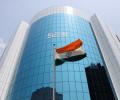
Only a fifth of foreign portfolio investors (FPIs) in breach of the market regulator-specified thresholds may need to provide enhanced disclosure on ultimate beneficiaries, thanks to exemptions being provided, according to people in the know. The ultimate beneficial ownership (UBO) disclosures, for FPIs with over 50 per cent holding in a single corporate group or over Rs 25,000 crore exposure to Indian assets, will be required from February 1. But, depending on their category, FPIs will have 10-30 working days to submit these granular details.

The market capitalisation of BSE-listed firms jumped to an all-time high of Rs 304.53 lakh crore on Wednesday, buoyed by an unprecedented rally in equities where the BSE benchmark Sensex ended over the 67,000-mark for the first time ever. Rallying for the fifth day running, the 30-share BSE Sensex climbed 302.30 points, or 0.45 per cent, to end at its lifetime closing high of 67,097.44 points. During the day, it jumped 376.24 points, or 0.56 per cent, to reach its all-time intra-day peak of 67,171.38 points.
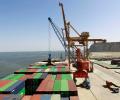
The customs officials, based on an intelligence input, halted a Malta-flagged merchant ship -- CMA CGM Attila -- at the port en route to Karachi on January 23 and inspected the consignment, which included a Computer Numerical Control (CNC) machine, originally manufactured by an Italian company.
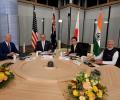
Saturday's Quad meeting in Delaware is taking place against the backdrop of China's assertive behaviour in the South China Sea, its sabre-rattling in the Taiwan Strait and increasing footprints in the Pacific and Indian Ocean, asserts Rup Narayan Das.

Macroeconomic data announcements, the Covid situation in China and global market cues would guide Dalal Street in the first week of trading in the New Year, analysts said. Markets would also keep a track on rupee movement, Brent crude oil prices and foreign fund investment trends. "As market players attempt to understand the Fed's stance, Indian markets may respond in lockstep with their international counterparts when the Federal Open Market Committee (FOMC) minutes are made public later this week.

Eighty per cent, or 60 of the 75 companies that made their debut on the mainboard this financial year, ended their listing day with gains.

A cocktail of heatwave and upcoming cricketing events is expected to usher in the peak season for the country's largest beer maker, United Breweries. The beer maker, which has gained share in some key markets, will be a major beneficiary as April to July is an important period contributing to 40-45 per cent of its annual beer volumes. Going ahead, the T20 Cricket World Cup in June and the ongoing IPL will have a positive impact on volumes and should be able to offset the negative impact of elections on sales, experts believe.

India and the US on Friday said they have started talks to put in place a strategic framework for human space flight by year-end as they plan to send an Indian astronaut to the International Space Station in 2024.

Indian fintechs and associated entities are hoping that the Union Budget 2024 will provide a boost and empower firms to extend their reach beyond Tier-II regions, with an emphasis on supporting enterprises led by women. The fintech industry, which has witnessed regulatory reforms over the last year, expects the Budget, scheduled to be presented by Finance Minister Nirmala Sitharaman on February 1, will further encourage financial inclusion, empower micro-small-medium enterprises (MSMEs) with lending solutions, and push for upskilling initiatives for the country's young workforce.

Tata Steel was the biggest gainer in the Sensex chart, rising 2.39 per cent, followed by Tata Motors, Power Grid, Reliance Industries, UltraTech Cement, NTPC, Nestle, HUL, Mahindra & Mahindra, Wipro, Kotak Mahindra Bank and Asian Paints. In contrast, Bajaj Finance, IndusInd Bank, Axis Bank, Bharti Airtel, Bajaj Finserv, ICICI Bank, Infosys and Titan were among the laggards.

After being underweight on domestic agrochemical companies and preferring global plays, brokerages believe that the former may perform better in the quarters ahead. Domestic crop protection companies have faced multiple headwinds over the past year and a half, given high inventory costs, pricing pressures, lower realisations in the generic segment, increased stocks due to lower infestations, and demand-led hits to volumes. Some of the overhang from previous quarters was reflected in the April-June quarter (first quarter, or Q1) of 2023-24 (FY24) as well, with aggregate revenues and operating profit for the sector down 12 per cent and 27 per cent, respectively.
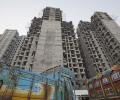
Shares of real estate firms have been outperforming over the past year. The rally, analysts say, may hit roadblocks in the near term amid stretched valuations, even as the long-term prospects for the sector remain ebullient. "Most of the positive news flow is already in the price. Hence, investors sitting on hefty profits may partially cash out at current levels," suggests V K Vijayakumar, chief investment strategist at Geojit Financial Services.

It aims at tackling issues such as child labour, mistreatment of workers, and denial of basic wages, among others. There will also be penalties for non-compliance.

The avoidable stresses and strains in ties helped in one way. It showed for the entire region how a matured India handled diplomatic relations, especially with a smaller and suspicious neighbour, with practised dignity and patience, unruffled by provocations in word, deed and action, observes N Sathiya Moorthy.

Modi attended the 20th ASEAN-India Summit in Jakarta. Secretary-General of ASEAN Dr Kao Kim Hourn also attended the summit.
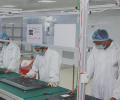
The stock of Dixon Technologies (India), the country's largest listed electronic manufacturing services (EMS) player, was up 6 per cent in 10 trading sessions, boosting the gains over the last three months to 21 per cent. The gains came following reports that Dixon will produce laptops in India in partnership with US and Chinese firms under the production-linked investment (PLI) scheme. It recently signed an agreement to make smartphones for Xiaomi India.

The BSE gauge Sensex fell 73.88 points to 35,548.26 and the NSE Nifty slid 17.85 points to 10,799.85, taking cues from tumbling global shares.

In a post on X, Modi said, "Happy to have welcomed @POTUS @JoeBiden to 7, Lok Kalyan Marg. Our meeting was very productive."

Britain has finalised 1 billion pounds worth of new trade and investment with India, creating over 6,500 jobs in the UK, to be signed off at a virtual summit between Prime Minister Boris Johnson and his Indian counterpart Narendra Modi on Tuesday. The investments confirmed by Downing Street on Monday evening form part of an Enhanced Trade Partnership (ETP), which will set the ambition to double the value of UK-India trade by 2030 and declare a shared intent to begin work towards a comprehensive Free Trade Agreement (FTA). "Like every aspect of the UK-India relationship, the economic links between our countries make our people stronger and safer," Johnson said.

Despite the robust growth in this country, Apple's India share in its overall global sales remained modest -- constituting 1.5 per cent of its overall turnover of $389 billion in FY23.
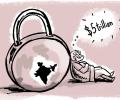
India will need $8 trillion (around Rs 588 lakh crore) of gross capital formation or new greenfield assets to become a $5 trillion (around Rs 368 lakh crore) economy by FY2027, a report said. The report by Deloitte said despite the COVID-19 disruption, FDI inflow into the country provides necessary optimism and display underlying strengths of the Indian economy. In FY2020-21, FDI inflows (including equity, re-invested earnings, and capital) amounted to a record $81.72 billion, 10 per cent higher than the previous financial year, it said.
Investors' wealth has soared by Rs 8,58,979.67 crore in three days of market rally, with domestic bourses climbing in tandem with global equities amid abating concerns over the economic impact of the Omicron variant. The 30-share BSE benchmark Sensex jumped 384.72 points or 0.68 per cent to close at 57,315.28 on Thursday. During the day, it gained 559.96 points to 57,490.52. In three days, the index has gained 1,493.27 points.

State Bank of India was the biggest loser in the Sensex pack, shedding 1.69 per cent, followed by Asian Paints, Kotak Mahindra Bank, HCL Technologies, Reliance Industries, Wipro, IndusInd Bank, Infosys, Power Grid and HDFC twins. In contrast, Nestle, Maruti, Bharti Airtel, Tata Motors, ITC and Hindustan Unilever were among the gainers.

As the ice-covered parts of the Arctic Ocean melt due to climate change, China has flagged its interest to take part in building 'Polar Silk Road', raising prospects for the emergence of a new sea route.

Chinese observers believe the Sino-US relationship will be impacted by issues in North Korea, Japan, India, Ukraine and Iran and that conflicts with these 'third parties' will without exception ultimately become conflicts between China and the US, points out former RA&W officer Jayadeva Ranade.

The deployment of the UK's "most advanced naval capabilities" has been flagged by the UK ministry of defence as a "decisive step" in bolstering UK-India security ties.

Prime Minister Narendra Modi on Saturday announced the adoption of the New Delhi Leaders Declaration, a significant victory for India's G20 presidency that came amid increasing tensions and divergent views over the Ukraine conflict.
Among the Sensex firms, Bajaj Finance emerged as the biggest gainer by climbing 2.95 per cent. Tata Motors, Bajaj Finserv, IndusInd Bank, Sun Pharma, Mahindra & Mahindra, State Bank of India, Larsen & Toubro, HDFC, HDFC Bank, Maruti, Reliance Industries and Bharti Airtel were the other major winners. HCL Technologies, Axis Bank, ICICI Bank, Tech Mahindra and Titan were among the laggards.

Google unveiled on Wednesday a slate of artificial intelligence (AI) tools and technologies for Indian developers at its first I/O Connect event for India, being held in Bengaluru. The company made accessible for Indian developers its faster, more accurate large language AI model accessible through PaLM API, Makersuite, as well as features on Google Cloud's Vertex AI. Google Cloud officially launched a new initiative in collaboration with Open Network for Digital Commerce (ONDC), under the Department for Promotion of Industry and Internal Trade, to help sellers build and scale commerce platforms across the country.

From the Sensex pack, State Bank of India, Axis Bank, IndusInd Bank, Tech Mahindra, HCL Technologies, Tata Consultancy Services, Maruti Suzuki, Tata Steel and Tata Motors were the major gainers. Power Grid and HDFC Bank were the laggards from the pack.

From the seas to the stars, this partnership will now be deepened by the defining role of technology, the statement said.

Stock market barometers Sensex and Nifty ended marginally higher on Monday as rise in wholesale inflation capped early gains despite a positive trend in global markets. The 30-share index settled 32.02 points or 0.05 per cent higher at 60,718.71 with half of its constituents ending in green. The broad based Nifty edged up 6.70 points or 0.04 per cent to close at 18,109.45.

The sharp rally in the broader markets has propelled India's market capitalisation (m-cap) to a new high. The combined m-cap of all BSE-listed firms rose to Rs 291.9 trillion in intraday trade on Thursday before settling lower at Rs 290.9 trillion. The previous record was on December 14, 2022, at Rs 291.3 trillion.

The S&P BSE Sensex ended up 28 points at 25,844 and the Nifty50 ended flat at 7,915.
